
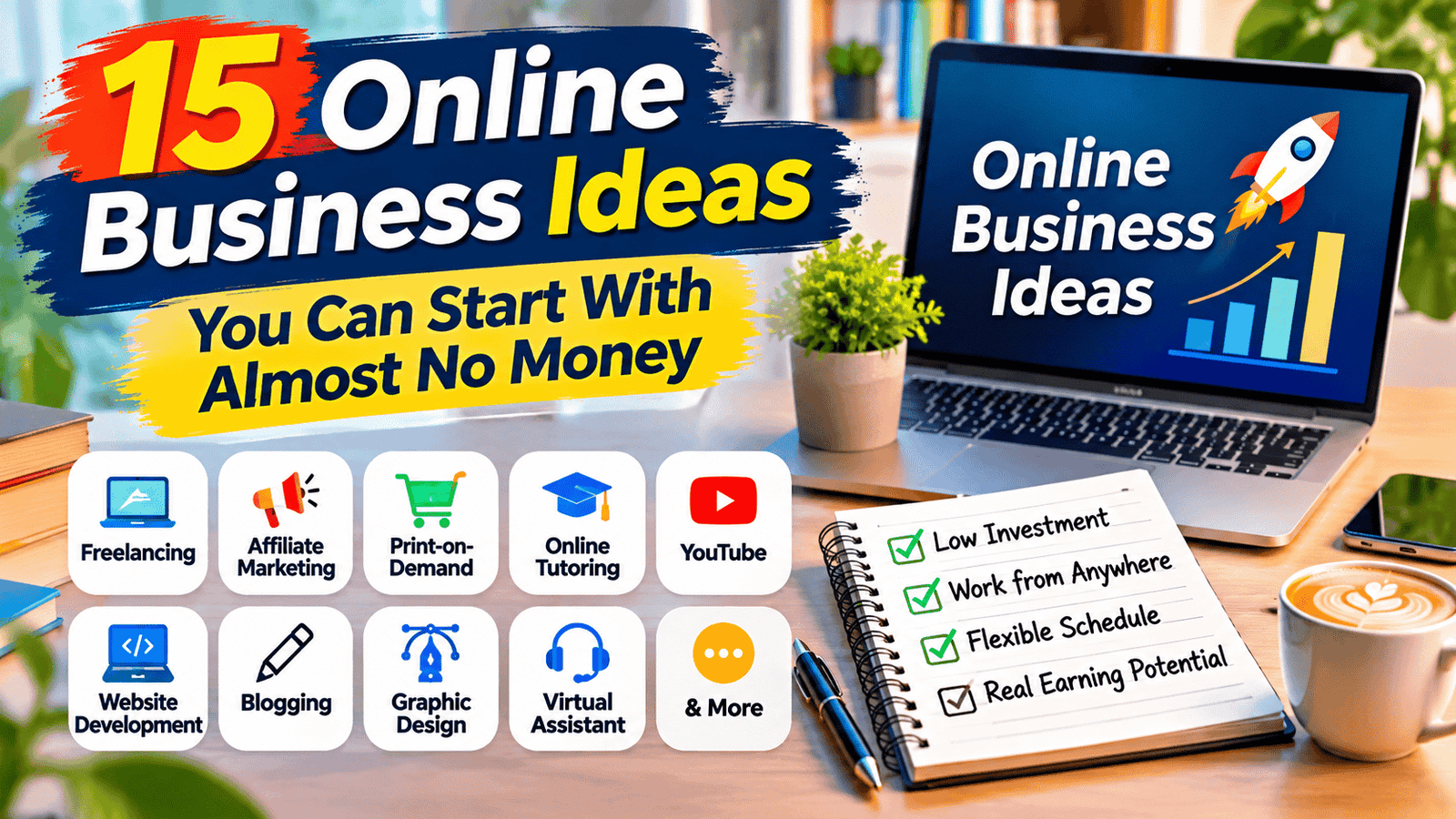
Starting an online business does not always require a large investment, expensive equipment, or a physical office. Many successful business models begin with a laptop, an internet connection, a useful skill, and a clear understanding of what customers need. These online business ideas offer practical ways to start earning online with almost no money while gradually building something that can grow into a sustainable business.
The key is to choose a business model that matches your abilities, available time, and target audience. Some options involve selling digital products, while others focus on providing services, creating content, or connecting buyers with sellers. In this guide, we will explore 15 low-cost online business opportunities, explain how each works, identify their earning potential, and share practical steps to get started.
1. Freelance Writing and Content Creation
Freelance writing is one of the most accessible online businesses because it requires little more than writing ability, research skills, and an internet connection. Businesses, bloggers, educational websites, and marketing agencies regularly need written content to communicate with their audiences.
You can offer different types of writing services, including:
· SEO blog posts and articles.
· Website content and landing pages.
· Product descriptions.
· Email newsletters.
· Social media captions.
· Business descriptions and profiles.
How to get started:
Choose one writing category and create three to five sample articles. Publish them in a simple portfolio using a free website or document-sharing platform. Then approach potential clients through LinkedIn, freelance marketplaces, and relevant business communities.
Platforms such as Fiverr and Upwork can help you find clients, although competition and platform fees should be considered.
Investment: Almost zero if you already have a computer and internet connection.
Main challenge: Building a portfolio and convincing your first clients to trust your work.
2. Social Media Management
Many small businesses understand that social media matters but struggle to maintain their accounts consistently. This creates an opportunity for people who understand platforms such as Instagram, Facebook, TikTok, and LinkedIn.
A social media manager helps businesses maintain their online presence and communicate with customers.
Typical services include:
· Creating and scheduling posts.
· Writing captions and hashtags.
· Designing basic social media graphics.
· Responding to comments and messages.
· Monitoring engagement.
· Preparing monthly performance reports.
For example, you could approach a local clothing store that posts irregularly and offer to manage its Facebook and Instagram pages.
You can create designs using free versions of tools such as Canva and schedule content using available platform tools.
Investment: Very low.
Main challenge: Managing client expectations and demonstrating measurable improvements rather than simply publishing posts.
3. Affiliate Marketing
Affiliate marketing allows you to earn commissions by recommending products or services offered by other companies. Instead of creating your own products, you promote existing ones through special tracking links.
When someone purchases through your qualifying link, you may receive a commission according to the affiliate program's conditions.
You can promote products through:
· A niche blog.
· YouTube videos.
· Product comparison articles.
· Social media pages.
· Email newsletters.
For example, a website focused on home office equipment could publish comparisons of keyboards, monitors, and office chairs. Readers who find the recommendations useful may purchase through affiliate links.
How to get started:
1. Choose a specific product category.
2. Identify reputable affiliate programs.
3. Build a website or content channel.
4. Publish useful reviews and comparisons.
5. Disclose affiliate relationships clearly.
Investment: Low, especially if you begin with free content platforms.
Main challenge: Generating consistent traffic and earning readers' trust. Affiliate income is not guaranteed, and commission rates can change.
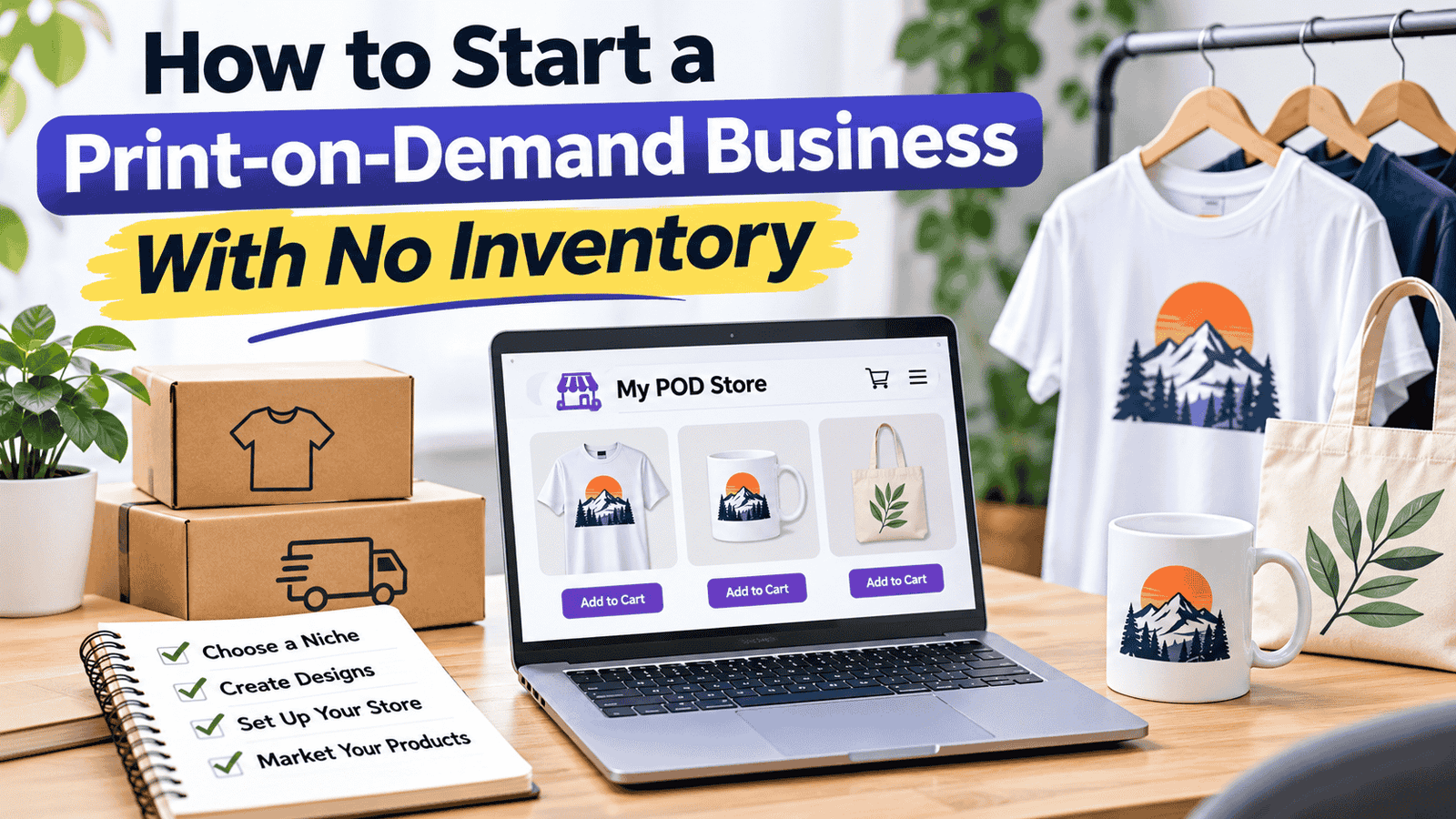
4. Print-on-Demand Business
A print-on-demand business lets you sell customized products without purchasing inventory in advance. Products such as T-shirts, mugs, hoodies, tote bags, and phone cases are printed after a customer places an order.
A third-party supplier handles printing and shipping, while you focus on designing products and marketing your store.
For example, you could create a clothing collection featuring original motivational designs, educational quotes, or minimalist artwork.
Steps to start:
· Choose a specific audience or product category.
· Create original designs using free design tools.
· Connect with a print-on-demand provider.
· Upload designs and create product listings.
· Promote your products through social media.
Platforms such as Printful and Printify offer print-on-demand services.
Investment: Low, although samples, storefront subscriptions, marketing, and other costs may apply.
Main challenge: Competition, product quality, shipping times, and maintaining a reasonable profit margin.
5. Selling Digital Products
Selling digital products is an attractive business model because you create a product once and can sell copies repeatedly without managing physical inventory.
Digital products are downloadable files or online resources that customers purchase for personal or professional use.
Popular examples include:
· E-books and study guides.
· Resume and CV templates.
· Budget planners.
· Excel spreadsheets.
· Website templates.
· Social media templates.
· Educational notes and practice questions.
For example, someone with knowledge of competitive examinations could create organized study notes, practice question collections, and revision planners for students.
You can sell these products through your own website or marketplaces that support digital downloads.
Investment: Very low if you already have the necessary skills and tools.
Main challenge: Creating genuinely useful products, reaching the right audience, and protecting your work from unauthorized distribution.
6. Online Tutoring and Teaching
If you understand a subject well, online teaching can turn your knowledge into a source of income. Students worldwide look for help with academic subjects, languages, computer skills, and professional development.
You do not necessarily need to create a complete online academy at the beginning. You can start by offering individual lessons through video calls.
Possible teaching areas include:
· English language and grammar.
· Mathematics and science.
· Computer fundamentals.
· Programming languages.
· School and university subjects.
· Competitive examination preparation.
How to get started:
Select a subject you can teach confidently. Prepare a short lesson plan, create sample teaching materials, and advertise your services through educational communities and social media.
You can later expand into recorded courses, group classes, and downloadable learning resources.
Investment: Almost zero.
Main challenge: Building credibility, finding students, and maintaining teaching quality.
7. YouTube Channel
YouTube offers an opportunity to build a content-based business around a subject that interests you. You do not need an expensive camera or professional studio to publish useful videos.
A smartphone, basic microphone, and free editing software may be enough to begin.
Potential channel ideas include:
· Educational tutorials.
· Technology reviews.
· Personal finance education.
· Cooking demonstrations.
· Competitive examination preparation.
· Product comparisons.
· Miniature crafts and creative projects.
You can eventually monetize a channel through eligible YouTube advertising, sponsorships, affiliate marketing, and your own products.
However, monetization requires meeting YouTube's eligibility requirements and complying with its policies.
Investment: Low if you already own a smartphone.
Main challenge: Creating consistent, original content and developing an audience. Results can take months or longer.
8. Blogging and Niche Websites
Blogging remains a practical online business model for people who enjoy researching and explaining topics. A niche website focuses on a specific subject and publishes useful articles that attract readers through search engines and other channels.
Instead of writing about everything, choose a focused topic such as:
· Technology and software tutorials.
· Education and examination preparation.
· Small business advice.
· Home improvement.
· Travel guides.
· Career development.
For example, a website dedicated to computer education could publish beginner tutorials, software guides, troubleshooting articles, and programming lessons.
A blog can generate income through advertising, affiliate marketing, sponsored content, and digital products.
How to get started:
Choose a domain, set up a website, plan your first 20 useful articles, and publish consistently. WordPress is a popular option for managing website content.
Investment: Low, although domain registration and hosting generally involve recurring expenses.
Main challenge: Search traffic takes time to develop, and publishing useful content consistently requires research and effort.
9. Virtual Assistant Services
A virtual assistant provides administrative and operational support to businesses and independent professionals remotely.
Entrepreneurs often need help with routine tasks but do not want to hire full-time employees. A virtual assistant can fill that gap.
Common services include:
· Email management.
· Appointment scheduling.
· Data entry.
· Online research.
· Document formatting.
· Customer support.
· Spreadsheet management.
· Basic project coordination.
You can begin with one or two services rather than offering everything.
For instance, you might specialize in managing email communication and organizing appointments for small business owners.
Investment: Almost zero if you have a computer and reliable internet.
Main challenge: Meeting deadlines, handling confidential information responsibly, and managing multiple clients.
10. Graphic Design Services
Businesses need visual content for websites, advertisements, packaging, presentations, and social media. If you have an eye for design, you can turn this demand into a freelance business.
You do not need to become an expert in every design category. Starting with a particular service can make it easier to attract customers.
Consider offering:
· Social media post designs.
· YouTube thumbnails.
· Business cards.
· Presentation slides.
· Promotional banners.
· Basic brand identity packages.
· Digital advertisements.
Start by creating sample designs for imaginary businesses. These samples can demonstrate your abilities before you have paying clients.
Free tools can help beginners, while professional software may become useful as projects become more complex.
Investment: Very low.
Main challenge: Standing out in a competitive market and understanding what clients actually want.
11. Website Development
Website development is a strong option for people interested in technology and problem-solving. Small businesses, freelancers, educational institutions, and startups often need websites but cannot maintain an in-house development team.
You can begin by offering relatively simple projects, such as:
· Business websites.
· Personal portfolios.
· Landing pages.
· Blog websites.
· Product catalogues.
· Website maintenance.
· Basic e-commerce stores.
If you already understand HTML, CSS, JavaScript, or WordPress, you have a useful starting point.
How to get started:
Build three demonstration websites for different business categories. Publish them in an online portfolio and approach potential clients with specific suggestions for improving their online presence.
You can gradually move into advanced services such as custom web applications, database integration, and e-commerce development.
Investment: Low if you already own a computer.
Main challenge: Delivering secure, responsive websites and providing reliable support after launch.
12. Online Reselling
Online reselling involves purchasing products at a suitable price and selling them to customers through digital platforms. You do not need to begin with a large shop or extensive inventory.
One approach is to start with products you already own or can source in small quantities.
Potential categories include:
· Clothing and accessories.
· Home decoration.
· Stationery.
· Mobile accessories.
· Handmade products.
· Pre-owned books.
Another option is to work with a supplier who can fulfill orders directly, although you should establish clear arrangements regarding inventory, returns, delivery, and product quality.
How to get started:
Research demand, identify reliable suppliers, calculate all costs, and test a small number of products before expanding.
Investment: Low, depending on the inventory and fulfillment model.
Main challenge: Product returns, delivery issues, supplier reliability, and competition on price.
13. Email Marketing Services
Email marketing helps businesses communicate directly with people who have chosen to receive their updates. Companies use newsletters, product announcements, welcome emails, and promotional campaigns to maintain customer relationships.
You can build a small service business by helping organizations create and manage their email campaigns.
Your services might include:
· Newsletter writing.
· Email template design.
· Welcome email sequences.
· Subscriber list organization.
· Campaign scheduling.
· Performance reporting.
For example, an online clothing store could use a welcome email sequence to introduce its products to new subscribers and explain its delivery and return policies.
Tools such as Brevo and Mailchimp offer email marketing features, with available plans and limits varying by provider.
Investment: Low.
Main challenge: Understanding audience segmentation, email deliverability, consent requirements, and campaign performance.
14. Online Translation and Transcription
People with strong language skills can offer translation and transcription services to businesses, researchers, educational organizations, and content creators.
Translation involves converting written or spoken information from one language into another while preserving its meaning.
Transcription involves converting audio or video recordings into written text.
Potential services include:
· English-to-Urdu translation.
· Urdu-to-English translation.
· Video transcription.
· Interview transcription.
· Subtitle preparation.
· Document translation.
· Proofreading translated material.
For example, a content creator may need accurate subtitles for educational videos to make them accessible to a wider audience.
Investment: Almost zero.
Main challenge: Maintaining accuracy, understanding specialized terminology, and protecting confidential client information.
15. Online Consulting and Coaching
If you have professional experience or specialized knowledge, you can provide consulting or coaching services online.
Unlike general freelancing, consulting focuses on helping clients understand a problem, evaluate options, and make better decisions.
Possible areas include:
· Career guidance.
· Business planning.
· Digital marketing.
· Website improvement.
· Interview preparation.
· Study planning.
· Productivity coaching.
For example, someone with practical experience in website development could help a small business choose an appropriate website structure, plan its features, and understand its hosting requirements.
Start with a clearly defined service and a specific audience. Explain what clients will receive during a consultation and avoid promising results that depend on factors outside your control.
Investment: Very low if you already have relevant expertise.
Main challenge: Establishing credibility and demonstrating that your advice provides practical value.
How to Choose the Right Online Business
Having 15 options does not mean you should attempt all of them. The better approach is to select one business that matches your current resources and has a realistic path to finding customers.
Consider these five factors before making your decision.
1. Evaluate Your Existing Skills
Start with what you already know. If you can design graphics, offer design services. If you understand programming, consider website development. If you are comfortable teaching, online tutoring may be a better starting point.
Using existing skills reduces the time and money required to enter a market.
2. Understand Your Target Customers
A business needs customers, not just a good idea.
Identify:
· Who needs your service or product?
· What problem are you solving?
· How do customers currently solve that problem?
· Why would they choose your offer?
The more clearly you understand your audience, the easier it becomes to create an appropriate offer.
3. Calculate the Actual Starting Cost
Almost no money does not necessarily mean completely free.
Consider expenses such as:
· Internet access.
· Domain and hosting.
· Software subscriptions.
· Payment processing.
· Marketing.
· Product samples or materials.
Start with free alternatives wherever practical and pay for tools only when they solve a genuine business problem.
4. Test Demand Before Investing
Avoid spending heavily on an idea before confirming that people are interested.
For example, before creating a complete digital course, offer a small paid workshop. Before launching an online store, test a few products with potential customers.
Early feedback can help you improve your offer without taking unnecessary financial risks.
5. Focus on One Business Initially
Managing several businesses simultaneously can divide your attention and slow your progress.
Choose one model, establish a basic service or product, and work toward securing your first customers. Once the business becomes manageable, consider expanding into related products or services.
Common Mistakes to Avoid When Starting an Online Business
Low startup costs make online businesses accessible, but they do not remove the need for planning and consistent work.
Watch out for these common mistakes:
· Expecting instant income: Most businesses need time to attract customers and establish credibility.
· Choosing an idea only because it is trending: Popularity does not automatically mean profitability.
· Ignoring customer research: A product without a clear audience is difficult to sell.
· Spending too early: Expensive subscriptions, advertising, and branding are not always necessary at the beginning.
· Offering too many services: A focused offer is usually easier for customers to understand.
· Copying competitors: Study successful businesses, but develop your own products, branding, and approach.
· Ignoring customer service: Communication, reliability, and after-sales support influence repeat business.
A small business becomes more sustainable when it solves a genuine problem and consistently delivers what it promises.
Conclusion
Building an online business with limited money is possible when you choose the right opportunity and use your available resources wisely. These 15 online business ideas cover different paths, from freelancing and digital products to blogging, e-commerce, and online education.
You do not need to launch a complicated business immediately. Start with one marketable skill, identify a specific customer problem, and create a simple offer that people are willing to pay for. Test your idea, learn from customer feedback, and reinvest carefully as your business grows.
The most practical starting point is not necessarily the business with the highest earning potential. It is the one you can realistically begin, manage consistently, and improve over time.


Comments (0)
No comments yet. Be the first to share your thoughts!
Join the Conversation
Share your perspective, ask questions, and connect with other readers on this story.